Belcarra Garden Club
BC, Canada

Christmas Botanical Folklore
Ahhh, “Christmas”: the scent of fir trees, the garlands of ivy, and the red delight of… RADISHES???
image: Patricia Castellanos - Getty images The magic of evergreens stems from the Druids, Celts, and Romans, for whom the branches represented hope and a promise that spring would return. Evergreen boughs were brought indoors long before the German carol “O Tannenbaum” (O Christmas Tree) was written, and decorated Christmas trees became popular in England in the 19th century thanks to Queen Victoria’s husband, Albert. Oak (Quercus robur) is a traditional choice for the Yule log, symbolizing strength and longevity. Chestnuts roasting on an open fire, as in “The Christmas Song,” are rather bittersweet: American chestnut trees were nearly wiped out by a blight in the early 20th century. No Christmas plant pairing is more iconic than holly (Ilex aquifolium) and ivy (Hedera helix). Druids considered the holly masculine and ivy feminine, bringing them into rituals to protect against evil spirits and ensure spring’s return. The carol “The Holly and the Ivy” describes the holly’s white flower, red berry, prickly leaf, and bitter bark – each later linked to aspects of the Christ story, the spiny leaves representing Jesus’ crown of thorns and the berries being his blood. A note here though, they were never brought inside before Christmas Eve as it might invite winter in too early! They were removed by Epiphany (January 6) to avoid bad luck. (PS. Harry Potter’s wand was made of holly!) Mistletoe (Viscum album) is another famous plant which again was sacred to the Druids. It is a hemiparasitic evergreen and it was never allowed to touch the ground after harvesting. Norse mythology relates that after the god Balder’s death, his mother’s tears became mistletoe berries. The kissing tradition was first documented in 18th century England. For every kiss stolen beneath the mistletoe, one white berry had to be plucked. When all the berries were gone, the magic was over! The “Rocking around the Christmas Tree” song has kept mistletoe smooching popular too! Did you know there was also a “kissing bough” tradition in England? A spherical frame decorated with holly, ivy, rosemary, and a hanging bunch of mistletoe symbolized fidelity and romance. The poinsettia (Euphorbia pulcherrima), native to Mexico, is a standard plant at this time of year. Legend tells that its red “flowers” (actually coloured bracts) were a poor girl’s tears, miraculously transformed into a gift for the Christ child. Closer to home, the Christmas rose (Helleborus niger) is a delight to see blooming in our gardens during the winter season, while paperwhite bulbs and amaryllis are favourites to force into bloom indoors. Colourful cyclamen (Cyclamen) is also popular, with some species blooming throughout winter. The kitchen is just as botanical. Rosemary, the “herb of remembrance”, was scattered across floors as an air freshener to bring a year of happiness, and bay laurel was braided into garlands to represent the victory of light over dark. Cinnamon (Cinnamomum verum) is a festive favourite, from mince pies to mulled wine; cranberries (Vaccinium macrocarpon) are the perfect accompaniment to roasted turkey and can also be strung into garlands; and delicious gingerbread houses and decorated ginger (Zingiber officinale) people are holiday staples. Pomegranates are a winter fruit featured in Greek Christians’ Christmas celebrations and in the Iranian tradition of Yalda night (the longest night of the year). Finally, the famous “Twelve Days of Christmas” gives us a partridge in a pear tree! One cautionary note as you decorate: the berries of holly and mistletoe and the leaves of ivy are toxic, so keep them well out of reach of children and pets. From radishes carved in Mexico to holly hung over a doorway, Christmas has always grown from the ground up. The next time you hang a wreath or sip mulled wine, look closely: the holiday’s roots run deep, and they are botanical! Go, gardeners, go!
|
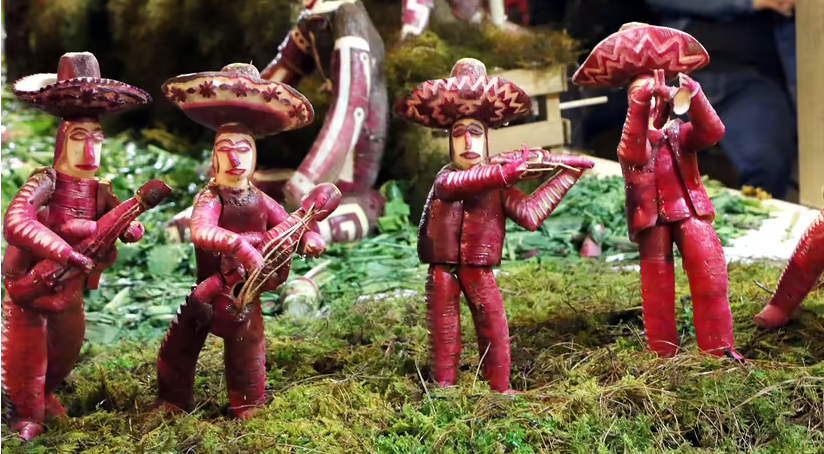

image: alesksa-geletey from unsplash
Related Links:
Christmas Botanical Folklore
https://www.kew.org/read-and-watch/12-plants-of-christmas
https://www.greatbritishlife.co.uk/magazines/national/24787916.myths-folklore-surrounding-christmas-plants/
https://www.english-heritage.org.uk/learn/histories/christmas-greenery-history/
https://www.nhm.ac.uk/discover/christmas-plants-traditions-science-festive-flora.html
https://blog.herbsociety.org/holly-ivy-mistletoe-and-other-christmas-greens/
https://www.lewisginter.org/the-legends-and-lore-behind-holiday-greenery/
https://www.almanac.com/plants-winter-solstice
For more than the typical, or most famous, plants of Christmas, visit:
https://www.icysedgwick.com/christmas-rose/
https://daily.jstor.org/rosemary-the-herb-of-ritual-and-remembrance/
https://www.nts.org.uk/stories/the-12-plants-of-christmas (not the same 12 as above)
https://botanykaren.net/2021/12/01/yew-the-first-christmas-tree/
https://archive.triblive.com/news/each-manger-herb-has-a-story/
https://www.yourweather.co.uk/news/trending/how-to-keep-your-christmas-cactus-healthy-tips-for-cold-sensitive-plants.html
https://aleteia.org/2015/12/10/juniper-boughs-the-donkey-and-the-holy-family/
